What do you do when the unthinkable happens? When a parent receives a terminal diagnosis, the world stops. This episode of Before Our Visit Ends confronts the overwhelming reality of losing a parent to cancer. Eunice sits down with her childhood friend, public health researcher Elyse, for a deeply personal and honest conversation about her family's journey after her father was diagnosed with stage four colon cancer. This is a story about navigating a complex medical system, the strength of family bonds, and the quiet questions that arise during care, grief, and remembrance.
How do you make impossible decisions about treatment? How do you balance hope with reality? In this episode, Elyse shares the raw experience of her family as they rallied together after her father's shocking diagnosis. She discusses the practical and emotional challenges of supporting a parent with stage four cancer, from deciphering medical jargon to coordinating care among six siblings. We explore the incredible importance of family support during cancer, as Elyse recounts how her siblings, mother, and extended family created a network of care that became their lifeline. The conversation delves into the difficult but crucial topic of patient autonomy in end-of-life care, highlighting the family's commitment to honoring her father's wishes, even when it was heartbreaking. Elyse and Eunice also touch upon the cultural silence that can surround a cancer diagnosis in some communities and the critical need for open conversations about prevention and screenings. More than just a story of illness, this is a look at finding moments of joy amidst the pain, from sunny afternoons outside to celebrating one last birthday together. Ultimately, Elyse offers her perspective on navigating grief after a parent dies, sharing how she learned to celebrate her father's life and legacy of kindness. This episode is a powerful guide for anyone facing the journey of losing a parent to cancer, offering solace, solidarity, and invaluable insight.
Introduction
Eunice: Welcome to Before Our Visit Ends, a space where we take a moment to get to know the whole person beyond their cancer diagnosis. Along the way, we'll gain meaningful insights on living a life that is not defined by cancer. These stories are sometimes heavy, sometimes unexpectedly light, but always honest.
During this podcast, my guests and I will be sharing personal experiences and discussing medical information. That said, the information we share is based on our own lived experiences, perspectives, and personal understanding. This podcast is not intended to replace medical advice. Please consult your own healthcare provider or licensed practitioner with any questions or concerns about your diagnosis or care. Before our visit ends, it's not responsible for any outcomes related to information shared in this podcast. Each episode is shared with the hope that someone listening might feel seen, better understood, or more informed. Elyse, welcome. How are you?
Elyse: I'm good. Thank you. Thank you for having me.
Eunice: I'm so happy to have you here. We have been meaning to record for a long time, so I'm excited that we are finally recording. Can you tell our listeners a little bit about yourself and your background?
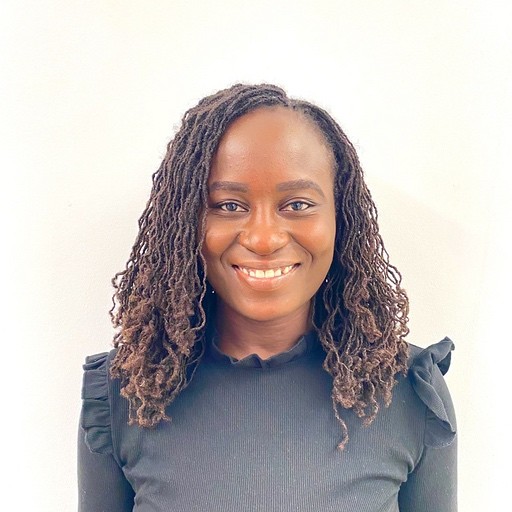
Elyse: Thanks for having me, Eunice. So I'm Elyse Iruhiriye. You and I know each other from high school. I think we first met in high school. So I grew up in New York, in Mount Vernon. I'm from Burundi, but we moved to the U.S. when I was young with my family, with my siblings, my parents.
I'm a researcher. I'm a researcher in public health. I work in a public health nutrition space, looking at the impact of health and nutrition programs, mostly in low and middle income countries, mostly in Africa. I've been doing that for over 10 years now as a research assistant. And then eventually I went and got my PhD in public health and have continued in the field. But that's a little bit about me.
Eunice: We've known each other for a long, long time from high school. We have known each other across so many different experiences, across different life stages. And one of those life stages was last year when I lost my mom first and then you lost your dad. So I think that was an experience that we've shared and you've shared it with other people.
And I think it's such an important experience, both losing a parent, which we both can talk about, but for yours was really hard because you lost your dad to cancer. So can you tell us a little bit about when you found out about the diagnosis?
Receiving a Stage Four Colon Cancer Diagnosis
Elyse: We found out in last year, around June, my father had been ill for a while. He's older, all sorts of different health things that are starting to come up at that age. But we had noticed that he was starting to lose weight, but we didn't really know what was going on. So for some time, probably a year before, a year and a half before, we just became a bit more involved in his health visits and making sure we're going with him to health visits, asking questions and just trying to make sure he was fine.
And different things came up. He had a heart condition that we were dealing with. So I feel like when we learned about the cancer it was a big surprise. I think cancer is not something that I had dealt with personally or we had heard about in my family. It was something you hear on the news or it goes around, it exists, but I had never felt it so close. So it was kind of shocking to hear about the diagnosis.
Eunice: What was important to you? And it would probably be helpful for our listeners to know what type of cancer he had and what the stage was. And then we'll talk about what was important to you during his care, whether that was maintaining his autonomy for making decisions. And how did you come together as a family to help him through this whole process?
Navigating Treatment Decisions and Family Support
Elyse: My father was diagnosed with colon cancer. It was stage four, quite aggressive at that stage. And I actually remember, I think you were the first person I called after I learned of his diagnosis. Again, we're six kids. I was with him when he learned the diagnosis and he messaged the whole family. It just hit me so hard. Cancer? I don't know. I thought it would be anything but that.
But at that stage, he was also getting sicker and sicker. He was having trouble eating and things like that. And so for my mom, it was trying to be there for him and provide the care and see what she could do to help him eat and function. It was just dealing with that.
So my siblings and I, my oldest brother took the lead, but we were there to support and help and say, "What do you need us to do?" It did help. We are a big family, so it was also useful to help. Say I can take off this week or that week and be home and help with the different appointments that are coming up. So it was nice to have that amongst ourselves, because it was a lot, even spending a week just going to appointments or being with him at home, trying to make meals for him and things like that. Because at that point, he wasn't really moving much.
Being able to have siblings to say, "Okay, I'll take the turn and then you can go rest or you go back to work and then I'll come in." So we tried to help each other in that way. But I think we were also very, at least for me, it was really, what do we need to do? What is there? And I think those were some of my first questions to you.
Because at first I spoke to you, but then I think you came in and spoke with my family, with my mom and my siblings, because a doctor can say, "Okay, we need to do this and we do chemo, we need to do this step," but it was very, I don't know anything about this. Is this the right approach? What questions do we even ask? It's hard to know for treatments, as a lay person, we often hear chemotherapy or radiotherapy or surgery, we don't know the difference or when one is more appropriate or the other. So I think with talking to you, that was just helpful in trying to figure out where do we even start?
Eunice: Were there any resources as you all were going through this, maybe hospital staff, navigators, or anyone that you all found to be really helpful?
Elyse: Hospital staff were very helpful. I think they understand when somebody's going through chemotherapy, that can be up and down. Sometimes you have very kind nurses and things like that, and some days you don't. So it varied, but at least at the hospital, we were the social worker, the social workers would try to let us know, "Think about this or this service exists." So I think we relied on information from them to let us know what existed. So those were helpful. But truthfully, I think for me, you were the most resourceful, at least to let us, if we said this is what's going on, this is what's happening. It always felt reassuring. The doctor said this. What do you think? Not that you were deciding what we should do, but it was helpful to just get your feedback.
The Difficult Balance of Patient Autonomy in Cancer Care
Eunice: One of the things that struck me, and we talked about this after your dad passed and I could see, was wanting to give him the autonomy to make his own decisions. Because even as I was giving the advice, I struggled with it a little bit because I knew what I wanted to happen and how I would have wanted to do it. But at the same time, I knew that that's not really my role. And I really appreciated how your family truly wanted to make sure that he made the decision and he felt this is what I did for myself. Was that hard to balance for you all as well?
Elyse: It was definitely hard. Maybe in the beginning, not as much because we just wanted to learn and we felt that was his decision to try the chemotherapy. My dad's always been a fighter. So we expected him to try it and say, "Yeah, let's try it, see how this goes."
But as days went on, as more chemotherapy sessions happened, as someone gets weaker, that definitely becomes a lot harder. Because you can have someone say, "Oh, this is terrible. Do we have to go through this chemotherapy?" But you also want your dad with you forever. So you think, whatever we need to do, let's try. It's definitely hard to also say, "Okay, what does he want?" It's his decision at the end of the day. We give him all the information and it's his decision to make.
I think even speaking with you, that's his medical history and opening that up to someone else. We had to make sure with him, "Hey, Eunice is an oncology nurse. She does this work. Can we talk to her?" We wanted to, I think even when we talked, I think I said, "I want to make sure I talk to my siblings, to my mom, to my dad and make sure everyone's fine." So I think we definitely wanted to talk to my siblings, to give him that space to make his decisions. But I think at the end of the day, we really understood it was his decision and to respect what he wanted to go with after he's gotten all the information.
Community Support and Breaking Cultural Silence Around Cancer
Eunice: Did you feel that while you all were going through this that your community showed up for you? What are the ways that you would say were the best ways that you found that were so helpful and the community that was there for you all?
Elyse: Our community at that time was a lot of family and friends or extended family. So there's a family in Burundi who were far away, but could still be near in just checking in on us or praying. Or just being close in that way, just checking in on us and praying.
And again, I've talked a lot about my brothers and my mom, but my sister-in-laws were also there. Whether it's someone helping prepare meals or trying to do things that you don't have to do, "I'll take care of this so you don't have to do this." Friends who are just reminding you we're here for you, let us know if you need anything. I think that was a lot of the ways that people came to me. A lot of this happened so much, not quickly, but over what felt quickly in the moment, because I think you're also just in that time dealing with a diagnosis and trying to care for the person. But I would say just people being there praying for us.
Eunice: In certain communities, I would say cancer is not something that people want to reveal. It's not something that people want to talk about. And there's so many reasons for this. One of those reasons, I think, is people don't want to appear that they're sick. And sometimes I feel people might attach some sort of blame to it, almost like you did something wrong.
And I'm hoping that I can find ways to demystify this and open up conversations so that people from different cultures can have these conversations about cancer because it is so prevalent. It is killing people and we don't want to talk about it. And so when people do get cancer, they are suffering in silence and they don't know the questions to ask. Did you feel that is something that you were able to reveal to the broader community? Was that something that was hard for your family to share or not something you really wanted to talk about with outside people?
Elyse: I think there was a level of privacy that you want with any health thing. You may want privacy, maybe not in-depth, sharing details. I did feel my dad had a level of privacy that he wanted. I think that's just how he is with anything. I don't think it was shame about the cancer. I think we're more just shocked about the cancer.
And cancer is becoming more and more prevalent. I do feel like it is something we should talk about more. And I work in public health, so prevention is an important thing. So I've thought more about how we talk about prevention and cancer and screenings and being okay to do those screenings.
Just getting that information out more, I do feel it's a scary word, cancer. It can be a scary word, but I think there's also a lot of cancers that can be treated quite well if found out early. And I just feel like that's what needs to be shared more until when should people start doing screenings for certain cancers. Or even, I think, learning about family history is something else that you don't often talk about in some communities. As I said, cancer felt like something new to us. But it could be if it's in our family, it's important to know. We should all get screened for colon cancer at 40 years old. It's recommended. We're not far from 40.
We're getting older. But being comfortable to tell people to do such screenings. I just feel like that information definitely needs to be shared more so that we're not just worried about the cancer and being scared about the diagnosis. But what can we do to treat it better?
Finding Moments of Joy Amidst the Illness
Eunice: And also just find out early so that, like you said, so that if you do find out early, how can we treat it sooner before it gets to stage four? And it might be something that you treat and doesn't even come back. Were there things you all did that were fun to bring your dad joy?
Elyse: Having the grandkids around definitely made him happy. When a parent becomes a grandparent, they're so different from their parent self. I think also being outside, I remember I wasn't there for this, but I remember it was one of those summer concerts that happened. And I think he had gone with my sister-in-law and my brother and my cousin and they were just outside. So I think there were pictures and you could just see he's happy being outside. And I think at that point, because he wasn't going out a lot because he was unwell, tired, and things like that, just being outside, being in the sun I think was nice for him.
We celebrated his birthday in that time frame and I remember just, and we tried to be all there together for his birthday. And I just remember how happy he was about that. The next day just was just so happy and kind of expressed it. So to just have his family together there was definitely times in all this too to just enjoy it.
And I think the other thing that brought him joy, my brother did this I think, was just play music for him as well. He really enjoyed music from back home and things like that was soothing, especially when he was in the hospital. So I think those are some of the things that come to mind.
Processing Grief and Finding Meaning After Loss
Eunice: How have you dealt with the grief after the loss? How have you taken care of yourself? And what have you found to be helpful with grief?
Elyse: Grief is hard, and you go through stages. In the early stages, it was not denial, but I didn't feel like he was gone. I remember at the funeral and things like that, it's just, I don't know, I feel like I'm going to see him next week or two weeks from now. And because I live in DC and he was in New York, it's not that we saw each other often. So it was easy to feel, "Okay, I'm just going away and in two or three months, I'll see you again." So you have those stages.
But there was also, it was difficult for me, at least, where I kept asking myself, did we do enough? Did we ask enough questions? Was there another care he could have gotten that's better? Or we wish we had caught it earlier or pushed my dad more to seek help earlier. But sometimes you can't know. But you kind of go through those stages. Could I have done something better? So that's hard. But I think life is life. And cancer came.
My dad fought hard and it took his life. So my faith was also important. And just knowing that everyone's life has a plan. God has a plan for everyone's life. And celebrating his life, remembering he's done a lot in his life. He's seen his children grow up. He's seen his grandchildren. And just being grateful for that, I think, has helped me a lot with my grief to just celebrate the good times, remember the good times, celebrate his life. I think that's helped a lot with dealing with the grief. But again, it's very up and down as well. So some days are better than others. But time with family definitely has helped.
Eunice: Looking back, what do you feel this experience has taught you about family, about resilience, or about yourself?
Elyse: I think it's taught me that we can't control life. And I think we know that, but it was a reminder of that. It's taught me to, or it reminds you to appreciate the time you have with people. Just treasuring the time we have with people, for sure. For me and my family as well, it's just knowing how to also care for ourselves and think about the certain cancer is in our family. Think about making sure you do your screenings and things like that. But it's taught me that being there for each other, I think, between friends and family, extended family. Just how much support can mean and help. And it could be something simple, very, very simple. But just learning to lean on others and we're not always the strong one or something like that.
Eunice: You can ask for help.
Elyse: Exactly.
Remembering a Father’s Legacy of Kindness
Eunice: What is the way that you would want your dad to be celebrated and remembered?
Elyse: I think I would want my dad to be remembered as someone who was full of love and I would say even humanity. The one thing I really appreciate a lot about my dad, he was someone who was also humble at the same time and saw humanity in others. I felt like he could talk to a five-year-old. He could talk to the delivery man or the guy at the dry cleaners or the guy at the store.
He just saw the humanity in everyone and respect for others, no matter what they do or where they are in life. It's just to treat people kindly. And I appreciate, I remember when he passed, maybe a few months after I was home in New York to see my mom and they get this water delivered and a guy came and he was just excited. He was like, "Oh, where's my man? Where's my man?" And I was like, "Oh, he passed away," but he obviously didn't know. But you could see how excited he was to just come to the house and he was like, "I haven't seen this person." And I'm like, why is the water guy so excited to call my dad? It was weird, but I think that showed just how he was. So I feel like that's an important way I like to remember my dad.
And he was just definitely a person who just wanted better, I think. He wanted things to be better and he definitely tried to make things better and fought for things to be better. So those are the things that, how I want my dad to be remembered or how I choose to remember.
Final Advice for Those Supporting a Loved One
Eunice: I love it. One last question, since our episode is coming to an end. For someone listening who is maybe just starting this journey with their parent or loved one, is there any advice, whether it's medical or any advice with a psychological, anything that you can think of that you would give them as you're going through this?
Elyse: The advice I would give is to find a moment in going through this diagnosis or treatment and things like that, to always come back to the person, especially for a parent. When we're growing up, we see our parents as the adults. And I think when you get older, you appreciate that they are people, they are persons.
And just like anybody, they have fears, things they love, things they hate, and things like that. I remember when, before the diagnosis, I used to talk with my dad a lot, almost get on him about, "You need to do this, you need to do that, you need to do this." But I think remembering they can also be scared in the moment. They can also have worries and things like that. So I feel like for me, I think because we were just very, "Okay, we need to do this, we need to do that, we need to check this, check that." It was just coming back and taking a moment to remember that this is a person, your dad is a person at the end of the day, whether it's your mom or your sibling.
This process is probably very scary for them. There's a lot happening and maybe things they may not be expressing. So I think trying to give them that space and comfort to feel their feelings as well. I think in the moment, we want them to be well. So we're just worried about how do we get you well? But like you said, I think it's related to the autonomy of them making their own decisions. It's coming back and remembering that they're also, besides the illness, have all these emotions they're probably going through and probably don't have time to process either. So I think just having pause and time to process and having time for that, even if it's short or little, because there is a lot going on. But I think that's what I would say to just think about that, having time to think about that.
Eunice: I love that. Thank you so much. I know this is hard. I know I'm asking a lot of tough questions, a lot of personal questions. So I really appreciate you taking the time. I really appreciate you going down memory lane with some tough questions. But I do think that your story resonates because we all have lost someone. And I think other people are going to find it really encouraging to hear. So thank you.
Elyse: Thank you for having me. Thank you for doing this.
Eunice: Although this visit has ended, I hope this story stays with you and you can share it with someone who might need it. Until next time, take care.